

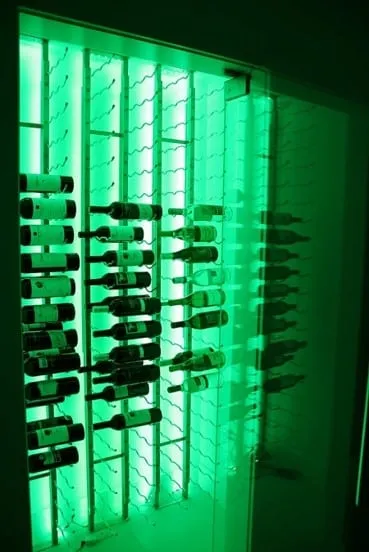
Modern wine rooms often look simple because much of the work is hidden. Thin supports, open walls, glass, and restrained finishes leave fewer places to disguise clutter or design mistakes. The cleaner the visual language becomes, the more important proportion and organization are.
A successful contemporary cellar therefore needs discipline. Bottle spacing, repeated lines, lighting, and the relationship between storage and negative space should be intentional. Minimal does not mean unfinished; it means every visible element has a reason to be there.
Let the Bottles Become Part of the Architecture
Traditional cabinetry can visually frame the collection, while open systems place more attention on the bottles themselves. Repeated bottle lines can act almost like a textured wall, especially when the background surface is simple and the spacing is consistent.
That is one advantage of contemporary wine storage. It can create a strong visual field without relying on heavy millwork. The collection becomes the main material, while the support system stays relatively quiet.
Use Negative Space on Purpose
An empty wall is not wasted wall if it improves the composition. A narrow gap around a display section, a break between rack banks, or open space beside a feature bottle can help the eye understand the room instead of reading it as one dense block.
Negative space is especially useful near glass. It prevents reflections, hardware, and bottles from competing at the same intensity. The room can still hold significant capacity, but strategic breaks make the overall design feel lighter and easier to read.
Keep Bottle Orientation Consistent Where It Matters
Label-forward storage creates a graphic rhythm, but irregular spacing or mixed orientations can quickly look accidental. Decide where labels should be visible and repeat that logic across the most prominent walls.
Dense areas can use a different orientation if capacity is the priority. The transition should feel intentional, perhaps separated by a display shelf, or change in rack type. Consistency within each zone matters more than forcing one orientation across the entire room.
Choose Racking Around the Collection, Not a Photograph
Inspiration images rarely show the awkward bottles. Real collections include Champagne, Burgundy, magnums, and other formats that need different clearances. A visually perfect grid can become inconvenient if it accepts only one bottle shape.
Flexible wine racking systems can combine standard storage with spaces for larger formats and display bottles. The modern look stays clean because the irregular pieces have a planned home instead of being placed wherever they happen to fit.
Hide Complexity Without Hiding Access
Contemporary rooms often conceal equipment and wiring, but concealment should not make service difficult. Removable panels, planned clearances, and logical access routes keep the room visually quiet while recognizing that mechanical components may need attention later.
The same thinking applies to switches and controls. They can be positioned discreetly without becoming inconvenient. A clean wall loses its appeal if the owner has to move bottles or open a cabinet every time a setting needs to be checked.
Keep the Material Palette Tight
Metal, glass, wood, stone, and light can all work in a modern cellar, but using every material at once weakens the effect. Pick a dominant language and let one or two secondary materials provide contrast.
A restrained palette also helps the room connect to nearby interiors. Repeating a black metal finish, a wood tone, or a flooring material from the home can make the cellar feel integrated even when the racking style is distinctly contemporary.
Use Lighting to Reinforce the Geometry
In a minimal room, lighting can clarify the structure without adding another material. A narrow wash down a bottle wall emphasizes repetition, while a quieter light at the edges preserves negative space. The goal is to reveal the arrangement rather than turn every rack into a separate visual event.
Controls should allow the room to feel different when it is being used and when it is simply viewed from outside. Brighter task light can help with selection, while a softer setting may suit an evening display. That flexibility supports the clean design instead of asking one lighting level to do everything.
Conclusion
Modern wine storage looks effortless only when the hidden decisions are disciplined. Consistent spacing, useful negative space, flexible bottle storage, service access, and a restrained palette allow the room to feel clean without sacrificing function.
Collectors comparing contemporary approaches can browse customwinecellarsorangecounty.com for visual ideas while judging each concept by how well it will work with their actual bottles and room.
