

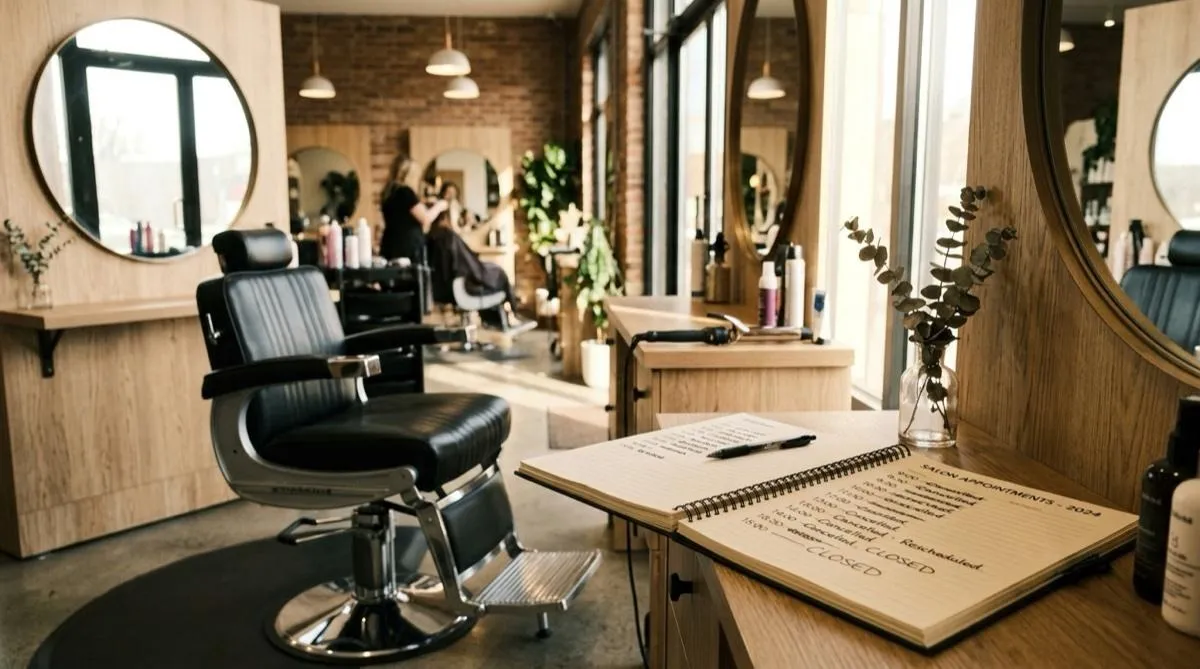
A single missed appointment does not feel like much. A 45-minute gap, an idle chair, maybe you catch up on inventory. But run the numbers across a month and it stops being a minor inconvenience.
The industry average for salon no-shows sits between 5% and 15%. If you see 30 clients a week and your no-show rate is 10%, that is three empty slots. At an average ticket of $85, that is $255 a week. $13,260 a year. Gone. Not rescheduled, not rebooked. Just empty time you already staffed and prepped for.
Calculate Your Actual Loss
Most salon owners know no-shows hurt, but few have quantified exactly how much. The Lutily no-show cost calculator lets you plug in your average service price, weekly client count, and no-show rate to see the weekly, monthly, and annual revenue you are leaving on the table. Seeing a specific dollar figure tends to be the thing that turns “I should do something about this” into actual policy changes.
Why Clients Ghost
Clients miss appointments for three main reasons. They forgot (no reminder, booked too far in advance). Something came up and they did not feel obligated to cancel (no deposit, no policy). Or the booking felt casual enough that skipping it carried no friction (a DM confirmation rather than a formal system).
Each of these has a fix. And none of them require you to be harsh or lose the personal touch that keeps people coming back.
Automated Reminders Cut No-Shows by Up to 70%
This is not a guess. Salon software providers consistently report that automated SMS or email reminders sent 24 to 48 hours before an appointment reduce missed bookings by 50% to 70%. The client gets a text, taps to confirm, and the slot is locked in. If they cannot make it, they cancel early enough for you to fill the gap.
The key word is automated. If you are manually texting clients the day before, you are spending 30 to 60 minutes a day on something a system handles in zero.
Deposits and Cancellation Policies
Requiring a deposit at booking filters out clients who are not serious. Even a small deposit, say $20 on a $120 color service, changes the psychology. The client now has money on the line. They show up. A clear cancellation policy posted on your booking page and confirmed via text removes ambiguity. Clients know the rules before they book. No awkward conversations at the chair.
Track Patterns, Then Adjust
Not all no-shows are random. Some time slots no-show more than others. Monday mornings, Friday evenings, the slot right after lunch. Track which days and times have the highest miss rate and adjust. You might double-book cautiously during high-risk windows, or offer those slots at a slight discount to attract more committed clients.
Repeat offenders are worth flagging too. A client who has missed three appointments in six months is not forgetful. They are costing you money. A polite conversation, a prepayment requirement, or a “we love having you but need to hold the deposit” text can solve it without burning the relationship.
The Payoff
Dropping your no-show rate from 15% to 5% on a 30-client-per-week schedule recovers roughly three appointments a week. At $85 average, that is $13,000 a year back in your pocket. No new marketing, no new clients. Just filling the slots you already had booked.
